



🚀 Join the Africa Creates Movement — Enrol, Participate, Partner Enrol Participate Join Africa Makes
● Advanced Problem-Solving Technologies

Engineering Africa's Future: SCIENCE & TECHNOLOGY NICHE

Africa's premier platform for AI, Quantum Engineering, Nanotechnology, and Systems Intelligence enabling making/production of devices across broad spectrum value chain to unlock the Africa's complete/latent potentials.

23+
Research Institutes
500+
Experts Network
42
Active Projects

Design · Innovate · Manufacture

Africa Creates solves local problems with homegrown engineering. Africa Makes turns those designs into TVs, phones, drones, cars, machines, AI, robotics, nano and quantum technologies — built on African soil.

Television

32" & 43" panel assembly, board layout finalised. Pilot production underway at Lagos Fab Hub.

Phone

Entry-tier and mid-tier models, shared logic board platform. Prototypes built at Kigali and Lagos.

Drone

Agricultural-survey and light-cargo drones. Fully local frame and arm design, flight-tested in Kigali.

Automotive

Electric vehicle conversion kits, battery assembly, and local manufacturing partnerships.

PCB & Electronics

Printed circuit board production, embedded systems, and consumer electronics fabrication.

Battery & Energy

Lithium battery assembly, solar micro-inverters, and off-grid energy systems.

AI + Robotics

Autonomous systems, machine vision, industrial robotics, and AI-driven process automation for African manufacturing and agriculture.

Nano + Quantum

Nanomaterials for energy storage, quantum sensing, and advanced materials research — building Africa's next-generation technology stack.

Consortium Segment: Group 5

Innovation & Learning Centres Team

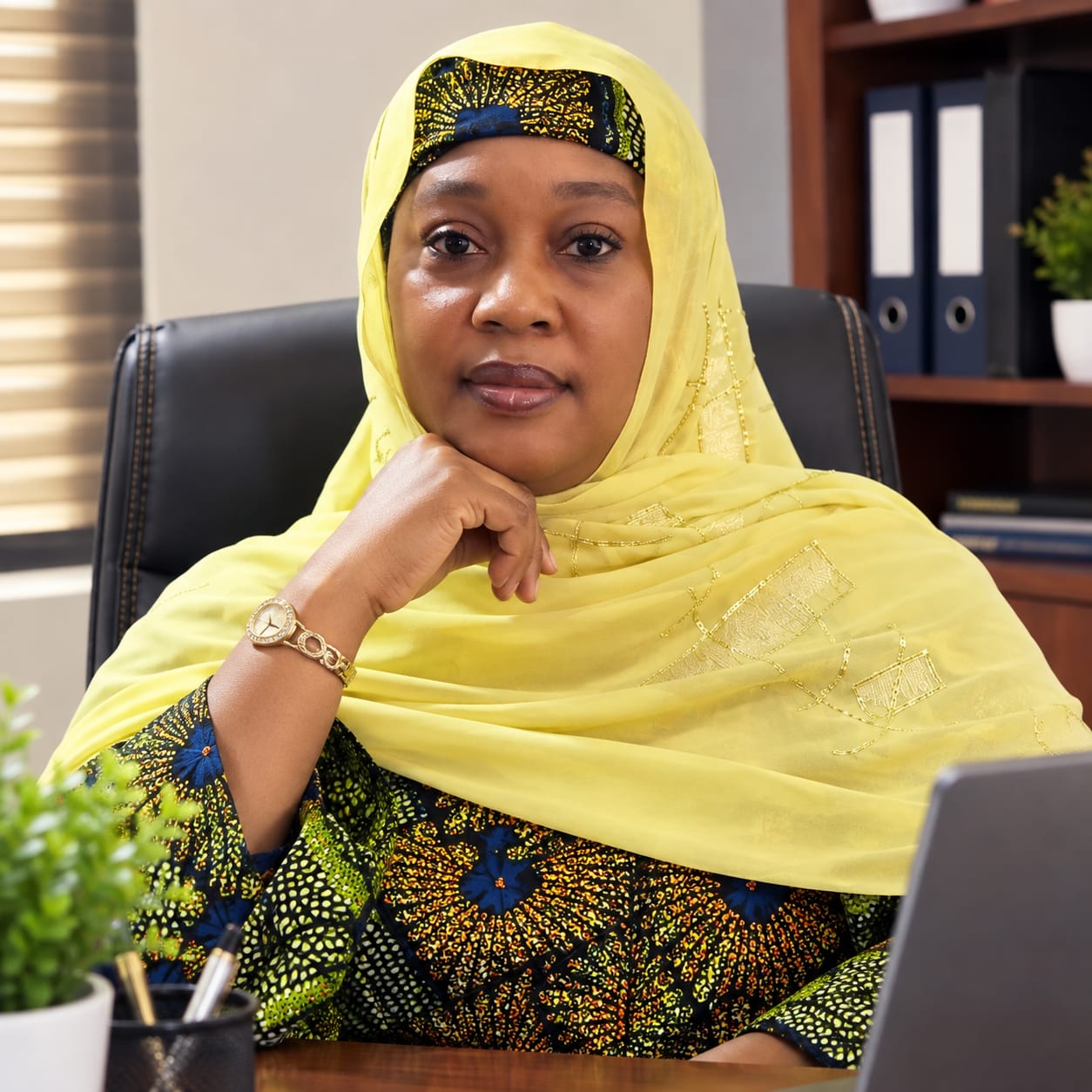
Ms. Asumpta Angeline

Dr. Asumpta Angeline

Executive Director - INNOVATION HUB

Ramatu Onozassi

Ramatu Onozassi

Program Manager

F. Eneche
F. Eneche

Secretariat Admin Officer

Dr. Shamsuddin A. EL Bey

African Knowledge Enthusiast

Odilia Anyachi Okonga

International African Knowledge School

Learning by Doing

Technical Knowledge Transfer

Focusing on the development of regional learning centers and technical knowledge transfer across the consortium.

Who Powers the Atomization Chain

Each stakeholder group maps directly to a layer in the Device Atomization framework — from raw materials and research to manufacturing, assembly, and commercialisation.

Universities & Polytechnics
Research & Materials Layer

Universities & Polytechnics

Institutions like Ahmadu Bello University (ABU) Zaria, Kaduna Polytechnic, Yaba College of Technology, and the African University of Science and Technology (AUST) Abuja provide the foundational research, talent pipeline, and early-stage prototyping capability that feeds every atomization layer. The Create Before You Graduate programme at ABU is a direct example of university-industry linkage — students move from materials science research to component design to working prototypes.

Government Ministries & Agencies
Infrastructure & Standards Layer

NASENI · NITDA · Ministry of Science & Tech

NASENI (National Agency for Science and Engineering Infrastructure) develops critical processes, capital goods, and equipment — the manufacturing infrastructure layer. NITDA provides the IT framework, standards, and digital skills platform. The Federal Ministry of Innovation, Science & Technology coordinates national R&D policy. Together they create the enabling environment where atomized components can be produced, tested, and certified locally.

Industry Leaders
Scale & Commercialisation Layer

Dangote · BUA · Tony Elumelu Foundation

Dangote Group operates across cement, manufacturing, agribusiness, and hydrocarbons — with the logistical scale to move atomized components into mass production. BUA Group (Abdul Samad Rabiu) focuses on education, healthcare, and strategic infrastructure. The Tony Elumelu Foundation has funded over 20,000 entrepreneurs across Africa, providing the venture capital and mentorship that turns component-level innovations into scalable businesses.

Inventors & Innovators
Proof of Concept → Product Layer

Jelani Aliyu · Terrahaptix · Young Nigerian Makers

Jelani Aliyu — Nigerian automotive designer behind the Chevrolet Volt, former DG of NADDC — demonstrates that Nigeria must move from 85% import dependence to local production. Nathan Nwachukwu & Maxwell Maduka (Terrahaptix) built Africa's largest drone factory in Abuja, producing surveillance drones with locally-developed ArtemisOS. These inventors prove that atomized understanding translates directly into finished devices — and they inspire the next generation to move from consumer to creator.

Stakeholder ecosystem mapped to Device Atomization layers · auto-advancing

Advisory & Stakeholder Coordination

The people who provide programme coordination, technical perspective, research guidance and stakeholder linkage.

Hajia Khadijah Zubairu
Consultant Advisory Board & General Stakeholder Coordinating Officer

Hajia Khadijah Zubairu

Hajia Khadijah Zubairu is a seasoned academic and business management professional with over 15 years experience, with sound knowledge of Company Secretariat functions, Corporate Governance and good communication skills.

She is an alumnus of Ahmadu Bello University, Kaduna State University and Bayero University Kano. She is a member of Women in Technical Education and Development (WITED), the Association of Nigerian Geographers (ANG) and the Nigerian Environmental Society (NES), among other professional bodies.

She started her career in business management in 1998 with Freedom Air Services and has attended many trainings and workshops on management, software management and leadership development.

Corporate Governance Company Secretariat Stakeholder Coordination Management & Leadership
Coordination focus: connecting advisory guidance, programme stakeholders, institutional relationships and implementation communication.
Research Leadership · Scientific Advisory Perspective
Research Leadership Network

Erouscilla Joseph, PhD

Focus: Geochemistry & Volcanology.

The programme materials identify her within the research leadership network connected to high-impact research areas and describe potential advisory roles including specialised panels, joint research labs and regional innovation clusters.

GeochemistryVolcanologyResearch Leadership
Environmental Systems · Marine Science Advisory Perspective
Research Leadership Network

Dr. Karl Aiken

Focus: Marine Ecology & Fisheries.

His profile in the programme's research leadership network connects marine science and fisheries management to the wider knowledge and innovation ecosystem.

Marine EcologyFisheriesEnvironmental Systems
Computing · Software Engineering Advisory Perspective
Research Leadership Network

Dr. Claudine Allen, PhD

Focus: Computer Science & Software Engineering.

The programme materials identify research in software quality, architectural modelling and computing education as relevant to the Science & Technology ecosystem.

Computer ScienceSoftware EngineeringComputing Education
Mathematical Modelling · Systems Intelligence
Research Leadership Network

Dr. Ajani Ausaru, PhD

Focus: Mathematical Modelling.

His profile is included in the research leadership network for applied mathematics and modelling relevant to complex systems and technology development.

MathematicsModellingSystems Analysis
Auto-advancing profile showcase · pause on hover

What Is Actually Inside a Device?

A simple visual language for ordinary people: start with a familiar device and progressively open it into modules, components, boards, chips and material inputs.

SMARTPHONE — complete device
↓ open the device
MODULES — display, camera, power, radio
↓ open a module
COMPONENTS — ICs, sensors, capacitors
↓ open the electronics
PCB / CHIPBOARD — connected circuits
↓ isolate the active parts
CHIP — silicon-based electronic function
↓ map the physical inputs
MATERIALS — metals, glass, polymers, minerals
Example 01 · Phone

From a phone to its building blocks.

Instead of seeing a phone as one imported object, Device Atomization asks: what are its modules, what components make those modules work, what boards connect them, and what materials ultimately make those components?

DisplayGlass · display layers · controller
CameraSensor · lens · module board
PowerBattery · BMS · charging circuit
LogicProcessor · memory · connectivity
SMART TV
↓
DISPLAY + POWER + AUDIO MODULES
↓
CONTROLLERS + MEMORY + POWER ICs
↓
MAIN BOARD + POWER BOARD
↓
PROCESSING + DISPLAY CHIPS
↓
GLASS + COPPER + SILICON + POLYMERS
Example 02 · Television

The TV becomes an industrial map.

Every familiar product can become a learning map. The objective is to show where design, materials, component manufacturing, PCB assembly and final integration fit into one production chain.

PanelDisplay assembly
PowerPower conversion
AudioAmplifier + speakers
ConnectivityWi-Fi / Bluetooth
AGRICULTURAL DRONE
↓
AIRFRAME + PROPULSION + AVIONICS
↓
MOTORS + ESCs + SENSORS + CAMERAS
↓
FLIGHT CONTROLLER + POWER BOARDS
↓
MCUs + IMUs + COMMUNICATION ICs
↓
ALUMINIUM + COPPER + POLYMERS + COMPOSITES
Example 03 · Drone

A drone is an entire technology ecosystem in miniature.

It combines precision mechanics, electronics, embedded software, sensors, batteries, communications and structural materials. That makes it an ideal benchmark product for learning to design and manufacture across disciplines.

StructureFrame · arms · landing gear
MotionMotors · propellers · ESCs
ControlFlight computer · sensors
MissionCamera · mapping · telemetry
COMPUTER
↓
MOTHERBOARD + DISPLAY + STORAGE + POWER
↓
CPU + RAM + SSD + CONTROLLERS
↓
MULTILAYER PCB
↓
PROCESSORS + MEMORY CHIPS
↓
SILICON + COPPER + GOLD + GLASS + POLYMERS
Example 04 · Computer

See the computer as a chain, not a mystery.

The same method can be applied to laptops, servers, medical equipment, vehicles, solar systems and industrial machines. Each level becomes a teachable and potentially manufacturable layer.

ComputeCPU / GPU / MCU
StorageMemory / SSD
DisplayPanel + controller
NetworkRadio + connectors
Swipe / click through devices · auto-advancing

From African Resources to Finished Technology

The final layer connects device atomization to materials, processing requirements, component production, assembly, testing and market.

One product — many industrial layers

Device Material Mapping AI is designed to dissolve a technology item into its material and production pathway, making the hidden industrial chain visible.

DevicePhone / TV / drone
ModulesFunctional assemblies
ComponentsActive + passive
BoardsPCB / SMT
ProcessingRefining + chemistry
Raw MaterialsMinerals + natural inputs
African SourcesWhere inputs occur

The chipboard becomes visible

A PCB is no longer just a mysterious green board. It can be opened into traces, copper layers, solder, passive components, IC packages and connectors.

Chipboard → components → materials

For ordinary users, the website should make electronics understandable. For students and engineers, the same picture becomes a production roadmap.

Copper tracesConductive pathways on the board
IC packagesProcessed semiconductor functions
PassivesResistors, capacitors, inductors
SubstrateLaminate, resin and reinforcing material

The industrial ladder

Each visible product can become a ladder of African capability.

ResourceGeology / biomass
RefinePurification
MaterialMetals / polymers
ComponentChips / passives
ModulePCB assemblies
ProductIntegrated device
ExportAfrica → world
AFRICA CREATES · AFRICA BUILDS · AFRICA OWNS · AFRICA EXPORTS
A simple public-facing explanation of the Device Material Mapping AI concept

Manufacturing & Production Processes Focus

Learn about advanced manufacturing technologies and production processes

Neural Networks Demystified

How artificial neural networks learn and make decisions.

15:42AI Basics

Quantum Computing for Africa

Understanding quantum computers and future applications.

18:25Quantum Tech

Modern Car Manufacturing

Explore how cars are assembled step-by-step in modern factories.

12:30Automotive

Smartphone Production Line

Inside a modern smartphone factory: components to final testing.

14:28Electronics

TV & Display Manufacturing

Modern television and display assembly processes.

11:50Display Tech

Nanotechnology in Manufacturing

Key nanotechnology applications changing production processes.

10:40Nanotech

Nigerian Innovators & Inventors

Celebrating Nigerian brilliance that has shaped science, medicine, and technology — our inspirators on the journey towards technology upgrades

Jelani Aliyu

Jelani Aliyu

Chevrolet Volt · Former DG, NADDC

Nigerian automotive designer who designed the exterior of the Chevrolet Volt — one of the world's most iconic hybrid electric vehicles. As former Director-General of the National Automotive Design and Development Council (NADDC), he championed the shift from 85% import dependence to local production. His career proves that Nigerian designers can compete at the highest global level and that Africa must move from consuming to creating automobiles.

Automotive Design Electric Vehicles Local Manufacturing
Drone Technology · Abuja

Nathan Nwachukwu & Maxwell Maduka

Terrahaptix — Africa's Largest Drone Factory

Founders of Terrahaptix, based in Abuja, Nigeria. They built Africa's largest drone manufacturing facility, producing surveillance drones and developing ArtemisOS — a locally-built operating system for unmanned systems. Their work demonstrates that Nigeria can manufacture advanced aerospace technology locally, from airframe design to flight control software, inspiring a new generation of young Nigerian drone makers.

Drone Manufacturing Aerospace Defense Tech Abuja
Supercomputing · Parallel Processing

Philip Emeagwali

Connection Machine — Fastest Computer (1989)

Nigerian-born computer scientist and engineer who developed the Connection Machine, which was recognized as the world's fastest computer in 1989. His work in parallel processing and computational fluid dynamics laid groundwork for modern supercomputing. He won the Gordon Bell Prize — the Nobel Prize of computing — and remains one of Africa's most celebrated technology pioneers.

Supercomputing Parallel Processing Gordon Bell Prize
Medical Devices · Portable Surgery

Dr. Seyi Oyesola

"Hospital in a Box" (CompactOR)

Nigerian medical doctor and co-inventor of the CompactOR — a solar-powered, portable medical and surgical system designed for remote and disaster-stricken areas. The "Hospital in a Box" can be packed into a shipping container and deployed where traditional hospitals cannot reach. His innovation demonstrates how African medical engineers can solve African problems with globally relevant solutions.

Medical Devices Solar Power Portable Surgery
Alternative Energy · Materials Conversion

Emeka Nelson

Urine-Powered Generator

Nigerian inventor who developed a generator that runs on urine — converting human waste into usable electricity. His innovation addresses both energy poverty and sanitation challenges simultaneously. The technology uses electrolysis to extract hydrogen from urine, which then powers a generator. It represents the kind of creative, resourceful engineering that Africa needs.

Alternative Energy Waste-to-Energy Green Tech
Biomedical Engineering · Blood Transfusion

Otu Oviemo Ovadje

Emergency Blood Transfusion Device (EATSET)

Nigerian physician and inventor who developed the Emergency Autologous Transfusion System (EATSET) — a portable device that recycles a patient's own blood during surgery, eliminating the need for donor blood in emergency situations. This is particularly critical in rural Africa where blood banks are scarce. His work has been patented internationally and represents the best of Nigerian biomedical innovation.

Biomedical Engineering Blood Transfusion Rural Healthcare
Refrigeration · Sustainable Cooling

Mohammed Bah Abbah

Pot-in-Pot Refrigerator (Zeer)

Nigerian teacher and inventor who created the pot-in-pot refrigerator (Zeer) — a simple clay pot system that keeps food fresh for weeks without electricity. Using only sand, water, and two clay pots, his invention has transformed food preservation for millions of rural farmers across Africa. It is a powerful reminder that the most impactful innovations often use the simplest materials.

Sustainable Cooling Food Preservation Appropriate Technology
Nigerian inventors who inspire the atomization journey · auto-advancing

Core Areas

Innovating for Every Human Need

HealthTech

Developing solutions for accessible diagnostics, telemedicine, and personalized healthcare for African communities.

AgriTech

Boosting food security through smart farming, supply chain optimization, and climate-resilient agriculture.

FinTech

Building inclusive financial systems, from mobile banking to blockchain solutions, for economic empowerment.

EdTech

Democratizing education with personalized learning platforms and digital resources for all ages.

Renewable Energy

Powering Africa's growth with sustainable and decentralized energy solutions like solar and micro-grids.

Smart Infrastructure

Creating efficient cities and logistics networks through IoT, automation, and advanced manufacturing.

Capacity Building

Online Tech Training Programs

Upskill and prepare for the future of tech with our expert-led online courses.

Web Development

Master front-end and back-end technologies to build complete web applications.

Data Science & AI

Learn to analyze data, build machine learning models, and unlock insights.

Cybersecurity

Understand threats and learn to protect networks and systems from attacks.

Register for a Course

Join the Movement

Let's Build the Future Together

Whether you are an innovator with a bold idea, an investor looking for the next big thing, or a potential partner, we want to hear from you.

Visit Our Aggregation Location

Explore our exact location on the interactive map below.

Open in Full Google Maps

Built on Circuits, Driven by Purpose

Every device, every innovation, every breakthrough begins with the intricate pathways of a circuit board. At ACW-SEDCI, we see beyond the components — we see the potential for Africa to design, manufacture, and own the technology that powers our future.

🎓 Live Training Portal

Knowledge transfer · live sessions · course materials · enrollment

Available Courses

Industrial Electronics

12 weeks · Level 3
PCB design, embedded systems, and troubleshooting.
Download form

Renewable Energy Systems

10 weeks · Level 2
Solar, wind, micro-inverters, battery storage.
Download form

Drone Technology & Agri-Tech

8 weeks · Level 3
UAV assembly, sensors, spray systems, mapping.
Download form

AI & Data Science

14 weeks · Level 4
LLMs, computer vision, African datasets.
Download form

Smart Water & Sanitation

6 weeks · Level 2
Filtration, quality testing, hydraulic modeling.
Download form

Advanced Manufacturing

12 weeks · Level 4
CNC, robotic arms, 3D printing, lean production.
Download form

Click "Download Summary" to get full course outlines, forms, and payment details.

Live now: Industrial Electronics

Instructor: Eng. A. Bello · 14 participants online

📝 Enroll in a Course

💰 Payment Summary

Course fee: $180 (or local equivalent)

Includes: live sessions, materials, certificate


💳 Pay via card, mobile money, or bank transfer. A payment link will be generated after enrollment.